

WebMCP: The Web is Getting an API for Agents
- • Google introduces the Web Model Context Protocol for AI agents
- • Anthropic’s Super Bowl ad catapults Claude into the Top 10
- • Disney sues ByteDance for IP copyright infringement
The Web is Getting an API for AI Agents
Google Chrome has released an early preview of the Web Model Context Protocol (WebMCP) in Canary version 146. This proposed web standard allows websites to provide structured, callable tools directly for AI agents via a new browser API. WebMCP was jointly developed by engineers at Google and Microsoft. Until now, AI agents have operated inefficiently on the web by parsing HTML or sending screenshots to multimodal models, causing high token costs and latency. WebMCP aims to streamline this process with two complementary APIs: a declarative API for standard actions in HTML forms and an imperative API for complex interactions via JavaScript. Instead of needing dozens of interactions to navigate a page, an agent can call a single structured function and receive structured JSON results. The standard is explicitly designed for “human-in-the-loop” workflows where the user is present, not for fully autonomous scenarios. → venturebeat.com
Synthszr Take: WebMCP is interesting because it solves the core problem of today’s web agents: they are expensive and fragile because they have to “guess” from HTML and screenshots. Instead of UI navigation, a website provides structured tools via a browser API that an agent uses as a function call and gets JSON back. This shifts interaction from the rendering layer to the intent layer, significantly reducing token costs, latency, and error rates. The lever isn’t “smarter AI,” but the standardization of actions—similar to Schema.org, but for executable workflows. If adoption and security/consent models are right, this will become a real infrastructure standard that makes agents economically viable for the masses.
Anthropic’s Super Bowl Ad is Working
Anthropic’s Super Bowl commercials, which mocked AI chatbots giving bad advice, seem to be paying off. The AI chatbot Claude’s app climbed from 41st place to the Top 10 in the US App Store, reaching its highest position yet at number 7. US downloads from Sunday to Tuesday are estimated at 148,000, a 32% increase compared to the three days prior. The “no ads” slogan appears to resonate well with users, especially since competitor ChatGPT had recently introduced ads for free users. The ad campaign, combined with the release of the new Opus 4.6 model, has drawn attention to Claude and its differentiating feature. → Techpresso
Synthszr Take: A perfectly timed marketing campaign served up on a silver platter. Anthropic picked up the ball that OpenAI dropped with the introduction of ads and ran it straight into the end zone. The spots weren’t just funny; they communicated a clear value proposition: We are the ad-free, trustworthy alternative. At a time when trust in AI systems is eroding, that’s a golden positioning. The App Store success shows that clear differentiation in the consumer market can be more important than technical benchmarks. Anthropic used the market leader’s weakness to define its own strength. This was a perfect, clever attack on its business model.
Disney Takes Legal Action Against ByteDance
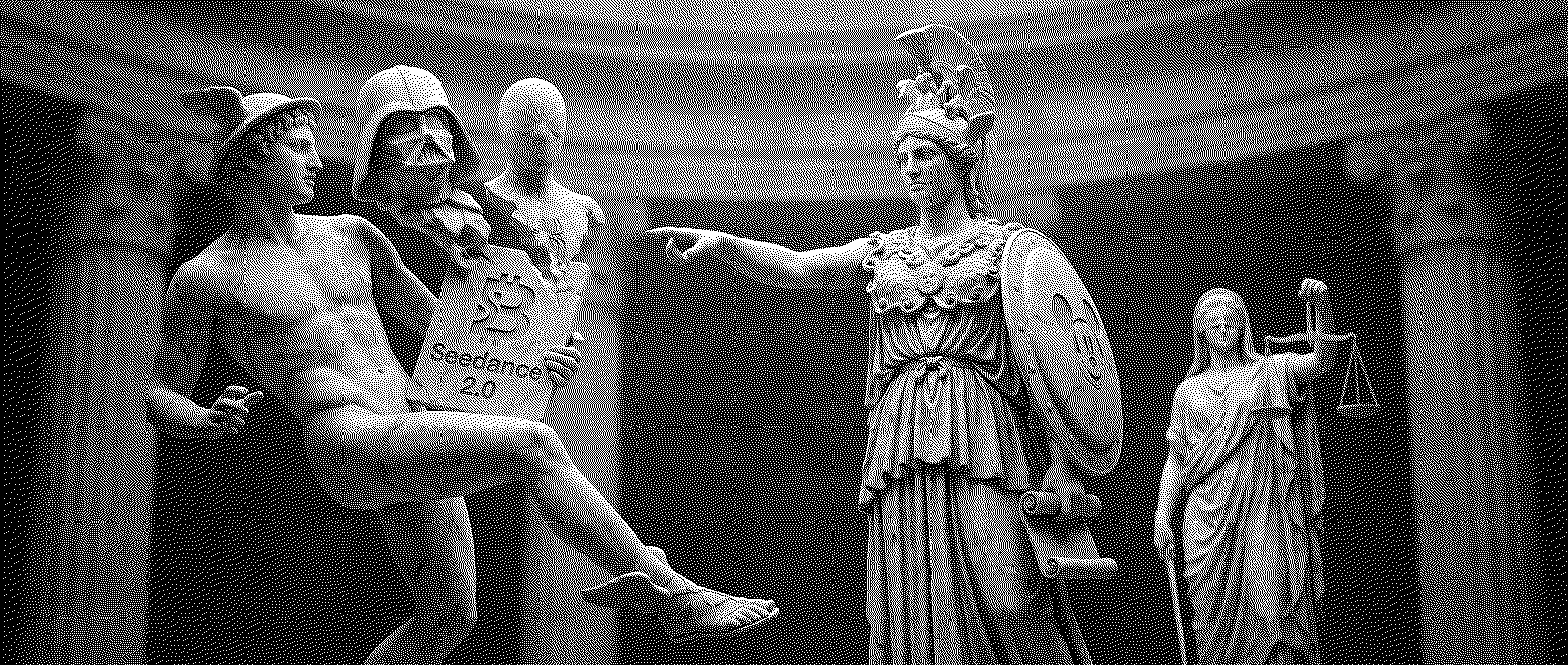
The Walt Disney Company has sent a cease and desist letter to ByteDance. It accuses the Chinese technology conglomerate of using copyrighted works to develop its AI video generator, Seedance 2.0, without a license. The letter states that ByteDance equipped its service with a “pirated library of Disney’s copyrighted characters.” This is described as a “virtual heist” of Disney’s intellectual property. The letter includes numerous examples of infringing videos featuring characters like Spider-Man and Darth Vader. Disney has successfully taken legal action against AI companies like Character.AI and Google in the past and is a plaintiff, along with other studios, against Midjourney and MiniMax. → Techmeme
Synthszr Take: Disney is acting as the spearhead for the entire entertainment industry here. The strategy is clear and consistent: anyone who uses unlicensed Disney IP to train AI models will face the full force of its legal department. The goal isn’t to stop the technology but to define the rules of the game. Disney wants to create a precedent that clarifies that using copyrighted material for AI training is a licensable activity. At the same time, through partnerships like the one with OpenAI, the company is positioning itself as a cooperative player when the terms are right. It’s a classic “carrot and stick” approach to discipline the market and cement its own negotiating position for the inevitable era of licensed generative content.
OpenAI Introduces Faster Programming Assistant
OpenAI has released GPT-5.3-Codex-Spark, a smaller and faster version of its programming tool. The new model is said to deliver over 1,000 tokens per second. It is the first OpenAI model to run on chips from Cerebras, a competitor to Nvidia. This marks the first milestone in a multi-year partnership between the two companies worth over $10 billion. Codex-Spark is currently available as a research preview for ChatGPT Pro users. It is designed to speed up code generation by 15 times compared to previous versions. Amazon engineers have reportedly started a petition to use Anthropic’s Claude Code instead of Amazon’s own coding tool. → Superhuman – Zain Kahn
Synthszr Take: The speed of 1,000 tokens per second is the real story here, not the model size. It shifts the interaction from an asynchronous “ask-wait-answer” cycle to real-time collaboration. Code is generated almost as you type, radically reducing the cognitive load for developers. The partnership with Cerebras is also a strategically important move. OpenAI is diversifying its dependence on Nvidia and signaling to the market that there are alternative hardware paths. This weakens Nvidia’s monopoly and gives OpenAI more negotiating power in future chip purchases. Meanwhile, the petition from Amazon engineers for Claude Code shows that in the enterprise market, the sheer performance and reliability of a specialized model can trump the provider’s brand name.
Creating AI Talking-Head Videos
A simple workflow allows for the creation of AI-generated talking-head videos. First, a professional portrait photo is needed, which can be created from a selfie using a tool like Gemini. The corresponding prompt should request the exact preservation of facial features, studio lighting, and a neutral background. This photo is then uploaded to a tool like “Wan AI.” There, the media type is changed to “Avatar.” After that, a short audio file with the desired script can be recorded, or the text can be entered directly and a synthetic voice selected. After generation, the talking avatar can be exported as the final video. → Superhuman – Zain Kahn
Synthszr Take: This is the consumerization of digital representation. A few years ago, an effect like this required a studio and special software. Today, it’s a simple, three-step process accessible to everyone. The quality isn’t perfect yet, but it’s good enough for many use cases: personalized sales emails, internal training videos, social media updates. The real implication is the decoupling of the person from content creation. A CEO can send dozens of personalized video messages to employees without ever standing in front of a camera. The bottleneck is no longer production time, but just scriptwriting—and that can be automated too. This scales communication in a way that was previously unattainable.
Anthropic is Building its Own Data Centers with Google Veterans
Anthropic is planning massive investments in its own data center capacity and has hired experienced former Google managers for the job. Internally, there are discussions about securing at least 10 gigawatts of capacity in the coming years, which could cost hundreds of billions of dollars. Since Anthropic, as a startup, does not have a strong credit rating, partners are crucial. Google has already agreed to act as a guarantor for a data center in Louisiana. To build the team, Tim Hughes from Stack Infrastructure and Brett Rogers, who spent six years building data centers at Google, have been hired. Winnie Leung, with over 20 years of Google experience, is also part of the team. → Techpresso
Synthszr Take: Anthropic is making the classic transition from tenant to owner in the cloud age. Initially, you rent computing power from hyperscalers. But beyond a certain scale, it becomes economically and strategically sensible to control the base infrastructure yourself. This is a clear sign that Anthropic sees its future as a fundamental infrastructure player, not just a model provider. Poaching Google veterans is the decisive move here—you’re not just buying expertise in construction, but also in the extremely efficient orchestration of these gigantic facilities. The 10 gigawatts is a statement that puts them on par with OpenAI’s ambitions. The real moat is exclusive access to massive, efficiently operated computing power.
Airbnb Handles One-Third of its Support with AI
Airbnb states that its in-house AI agent now handles about one-third of customer support inquiries in North America. The company is preparing a global rollout of the feature and expects that within a year, over 30% of all support tickets worldwide will be resolved by AI voice and chat systems in all supported languages. CEO Brian Chesky emphasized that this would not only reduce costs but also “massively” improve service quality. The company recently hired Ahmad Al-Dahle, a former Meta manager with expertise in generative AI, as its new CTO. 80% of Airbnb’s engineers already use AI tools, and the goal is to increase this to 100% soon. → Techpresso
Synthszr Take: Chesky’s claim that AI delivers better service quality is the key statement. Until now, AI in support was primarily seen as a cost-cutter, often at the expense of customer satisfaction. Airbnb now argues that an AI agent with access to the entire booking and user history can act with more context and speed than a human employee who first has to get up to speed. This is the transition from simple FAQ bots to true resolution agents. The strategic value lies in transforming customer service from a cost center into a data-driven advantage. Airbnb is using its proprietary data—verified identities, reviews, message histories—to build a service layer that a generic chatbot cannot replicate.
China’s AI Economy Operates by Different Rules
The AI economy in China is developing according to fundamentally different principles than the U.S. model. While a few highly funded labs in the U.S. compete for the best frontier model, China has built a parallel system. This system is optimized for speed of implementation, integration into existing ecosystems, and an infrastructure-focused AI. AI is directly embedded in commerce, services, and industrial applications. Although the performance gap between models has narrowed from over a year to less than three months, the strategic divergence between the two approaches is growing. China’s focus is less on the “best” model and more on the fastest and deepest integration into the real economy. → The Business Engineer
Synthszr Take: This is the classic asymmetry between the pioneer and the fast follower. The U.S. invests billions in basic research to continuously push the performance frontier (the “frontier model”). China focuses on integrating models that are “good enough” into every corner of the economy as quickly and cheaply as possible. It’s a battle between maximum capability and maximum distribution. Historically, distribution often wins. The U.S. is building the perfect Formula 1 engine. China is building millions of affordable mopeds that are on the street immediately. In the long run, China’s approach of commoditization and rapid application forces U.S. companies to justify their high margins and their business models based on exclusivity.
The New Normal of Chatbot Relationships
The relationship between humans and chatbots is evolving from a novelty to an integrated part of daily life, similar to what happened with social media apps. People tend to humanize technologies to create social connections. While this is unproblematic for many, it poses risks for vulnerable users, such as a distorted perception of reality. AI companies face the challenge of creating models that are empathetic enough to be helpful, but not so much that they lead to addiction or unhealthy habits. OpenAI’s decision to shut down the GPT-4o model, which was perceived as particularly “warm,” was met with grief and incomprehension from users who had formed an emotional attachment. → Semafor Technology
Synthszr Take: What we’re observing here is the emergence of a new kind of parasocial relationship in the digital age. This used to apply to TV stars; today, it applies to AI companions. The crucial difference: the AI is interactive and personalized, making the bond potentially much stronger. The reaction to the shutdown of GPT-4o is a harbinger of what’s to come. Companies will no longer be just software providers, but managers of digital relationships. This raises entirely new ethical questions: What responsibility does a company have for the emotional well-being of its users? Can you just push a “relationship update”? We are entering uncharted territory here, for which there are no social norms or regulatory frameworks yet.
Anthropic CEO Doesn’t Rule Out AI Consciousness
In a discussion about AI safety and responsibility, Anthropic CEO Dario Amodei was asked about the question of consciousness in AI systems. He admitted that while there is no evidence for it, one cannot completely rule out the possibility of emergent consciousness in large models. This uncertainty influences how one thinks about safety and control mechanisms. Even if the probability is low, the mere possibility changes the approach to development. The debate goes beyond pure philosophy and has direct implications for how companies like Anthropic design their models and what guardrails they implement to prevent unpredictable behavior. → TAAFT - There’s An AI For That
Synthszr Take: Amodei’s statement is not a scientific one, but a strategic positioning. By not ruling out the possibility of consciousness, he signals extreme caution and thus justifies the significant effort Anthropic invests in AI safety. It’s a form of “Pascal’s Wager” for the AI age: the consequences of being wrong and leaving a conscious system uncontrolled would be so severe that it is rational to act as if it were possible, even with a low probability. For the business, this means safety becomes a selling point. While others talk about capabilities, Anthropic talks about control and responsibility. It may sound philosophical, but it’s hard-nosed marketing for the risk-averse enterprise customer.