

95% of AI projects don’t actually fail, and Apple wants to (almost) read minds
Anthropic wants to become the Uber SaaS interface, Apple is buying into the ambient AI future, 95% of AI projects aren’t failing, and more
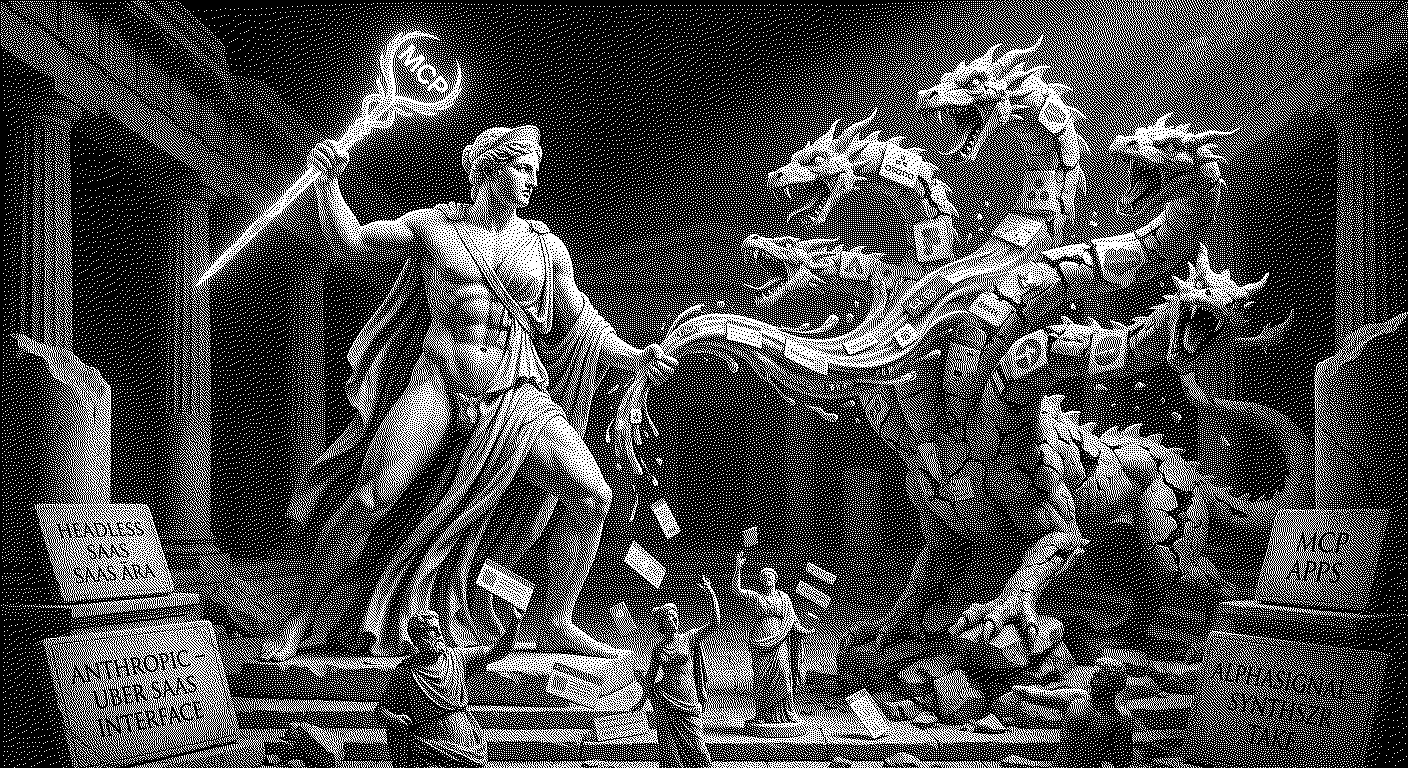
Anthropic wants to become the Uber SaaS interface
Anthropic is introducing “MCP Apps,” an architecture that allows interactive dashboards and UI elements from third-party providers like Asana or Figma to be embedded directly into the Claude chat stream. The “Model Context Protocol” acts as a universal standard, enabling LLMs not just to generate text, but to render functional mini-applications on the fly. This eliminates the constant context switching between the chatbot and the specialized application, as the state remains synchronized between the model and the tool. This is a direct attack on the fragmented SaaS landscape by decoupling the user interface from the data logic. For software providers, this means their proprietary interface loses value as a differentiator (moat). Interaction is shifting from the “destination site” to an orchestrator-driven stream. → AlphaSignal
Synthszr Take: We are witnessing the beginning of the “Headless SaaS” era. For decades, we defined software by its GUI; MCP degrades these applications to mere data suppliers for the all-powerful AI context. For product owners, this is a nightmare scenario: if the user experience moves into the chat, you lose control over the brand experience and direct customer contact. Anyone without a strong API strategy will become invisible in this new world—or worse: interchangeable.
Apple buys into the ambient AI future
Apple has acquired the Israeli startup Q.AI for nearly $2 billion, whose technology analyzes micro-expressions to interpret “silent speech.” Patents suggest this technology could be integrated into future versions of AirPods and Smart Glasses to enable discreet interaction with AI assistants. The deal is one of the largest acquisitions in Apple’s history and aims to close the gap with competitors like Meta in the field of wearable interfaces. By enabling voice input without acoustic signals, Apple solves one of the biggest social problems of voice interfaces: the embarrassment of speaking to a computer in public. It’s a classic Apple move: buy technology that solves a fundamental UX problem and integrate it vertically. → Techmeme
Synthszr Take: While everyone is staring at LLMs, Apple is solving the “last centimeter” problem of AI: How do we interact with it without looking totally cringe? “Subvocalization” is the holy grail of ambient computing. If this technology works, it will replace the smartphone as the primary input device. It’s the ultimate reduction of friction—mind reading lite, packaged in Cupertino design.
95% of AI projects fail? A myth
A viral narrative claiming that 95% of AI projects deliver no ROI has been debunked as statistically questionable and methodologically flawed. The figure was based on a small, unrepresentative sample and conflated different project phases, but it took on a life of its own as a “fact” through citations in reputable media. This shows how susceptible the discourse is to confirmation bias: skeptics eagerly seize any number that promises the bubble will burst. In reality, we are in the typical diffusion phase, where early experiments naturally often fail before scalable use cases emerge. The reality is more nuanced than the headline. → Exponential View
Synthszr Take: Decline narratives sell well, especially when the hype cycle is past its peak. But using bad data as ammunition against hype is intellectually lazy. We need to stop measuring AI against unrealistic “magic wand” standards. The technology works; organizational integration is the problem. Anyone who hits the brakes now because of false statistics will be left behind once the teething problems are overcome.
Brands are making fun of AI slop
Brands like Dollar Shave Club and Starbucks are ironically using generative AI in their campaigns to make fun of the generic “AI slop” flooding social media. It’s a meta-commentary on the technology: using the tool to stage its shortcomings (hallucinated images, bizarre aesthetics) as a stylistic element. This strategy aims to signal “authenticity” through a deliberate distinction from synthetic perfection. At the same time, it normalizes the aesthetics of AI errors and turns them into a cultural code. → Marketing Brew
Synthszr Take: When the “glitch” becomes a feature, we have arrived in the post-hype era. Brands are leveraging our collective fatigue with synthetic content. It’s clever marketing, but also cynical: “Look how bad AI is,” generated with AI. It shows that we are culturally learning to read and classify the artifacts of the technology. The only problem is that current models no longer make these mistakes: campaigns for the creative awards circuit.
OpenAI is building a “Dark Forest” network
According to reports, OpenAI is working on a social network reserved exclusively for verified humans, possibly using biometric data (“The Orb”). The goal is to create a space free of bots and AI-generated spam—a reaction to the increasing indistinguishability between synthetic and human content on the open web. This could drive a fragmentation of the internet into “verified human zones” and an “AI wilderness.” It is an attempt to establish “Proof of Personhood” as a premium feature. However, massive privacy concerns remain. → The Information AM
Synthszr Take: Welcome to the “Dark Forest” of the internet. We have spammed the open web with so much of our own AI garbage that we now have to retreat into verified gated communities to meet real people. This is the ultimate irony: the company that democratized bots is now building the bunker against them. “Being human” is becoming an exclusive club feature.
Xiaomi is building a “Dark Factory”
Xiaomi has opened a fully automated “Dark Factory” in Beijing that produces smartphones 24/7 without human labor—one device per second. The entire facility is controlled by an internal AI platform that autonomously handles quality assurance and maintenance. This is the physical manifestation of the “Software is eating the world” thesis: the factory itself becomes a robot. It demonstrates China’s lead in integrating AI and industrial manufacturing. Humans are evolving from assembly line workers to system architects of the machine. → AI Valley
Synthszr Take: While we in the West philosophize about AGI, China is building the machines that supply the world. This is the true industrial revolution 4.0. A factory that needs no light because no one works inside is the ultimate symbol of efficiency—and of the obsolescence of human muscle power. Anyone who wants to build hardware now needs to not only hire engineers but also breed an autonomous species of factories.
DeepMind deciphers “Dark DNA”
With AlphaGenome, Google DeepMind has released a model that can analyze the 98% of DNA that does not encode proteins and was previously poorly understood by science. The model reads up to one million DNA base pairs at a time and can predict the effects of individual mutations on gene regulation. This is a potential breakthrough for diagnosing rare diseases and understanding complex genetic relationships that were previously hidden in the “dark genome.” Unlike LLMs that hallucinate text, this model provides precise predictions in an area too complex for human analysts. It shows that the true value of AI often lies in “deep science,” far from chatbots. → The Neuron
Synthszr Take: While we argue about chatbots writing bad poetry, DeepMind is quietly solving the fundamental problems of biology. This is the real “AI Boom” that Andreessen talks about. This isn’t about increasing marketing efficiency, but about a new level of scientific discovery. AlphaGenome is proof that AI is the ultimate microscope for complexity.
Tesla sacrifices its luxury class for the robot
Tesla is halting production of the Model S and Model X to make room at its Fremont factory for the production of the Optimus humanoid robot. This radical step marks the final metamorphosis from a car manufacturer to an AI and robotics company. Musk is “burning the ships” behind him to commit the organization to an autonomous future, even at the expense of current revenue. It’s a bet that the future value of hardware lies not in mobility, but in general labor. The “legacy” products are being sacrificed to force the scaling of the new platform. → StrictlyVC
Synthszr Take: It doesn’t get more radical than this. Musk is killing his cash cows (or at least his halo cars) to bet on a future that doesn’t exist yet. This isn’t a tactical recalibration, but an all-in poker move. If Optimus doesn’t deliver, Tesla has cut off its roots. But Elon’s sound doesn’t have the magic it used to—too often he’s had to tone down his loud promises.
Theory of the Intelligence Explosion
A new analysis examines the mechanisms of a possible “Intelligence Explosion” through three feedback loops: software (AI writes better code), chip design (AI designs better chips), and chip production (robots build in factories). If these loops interlock, progress could shift from linear to hyper-exponential growth. The analysis argues that we are only at the beginning of the S-curve and that physical limits are still far off. It is an attempt to translate the “Singularity” concept into concrete industrial processes. → Noahpinion
Synthszr Take: This is the stuff of sci-fi dreams (and nightmares). But if you leave out the emotional component, it’s pure mathematics: compounding interest on intelligence. The question isn’t “if,” but “how steep” the curve is. When AI starts building the factories that build the chips that run the AI that designs the factories... we’d better buckle up. Or we pull the plug. If we can still find it.